Monday, August 31, 2015

New York Times: Homeownership is Best Way To Build Wealth


New York Times: Homeownership is Best Way To Build Wealth


 New York Times: Homeownership is Best Way To Build Wealth | Keeping Current Matters
The housing market has made a strong recovery, not only in sales and prices, but also in the confidence of consumers and experts as an investment. In a New York Times editorial entitled, “Homeownership and Wealth Creation” they explain:
“Homeownership long has been central to Americans’ ability to amass wealth; even with the substantial decline in wealth after the housing bust, the net worth of homeowners over time has significantly outpaced that of renters, who tend as a group to accumulate little if any wealth.”
Many of the points that were made in the article are on track with the research that the Federal Reserve has also conducted in their Survey of Consumer Finances.
The study found that the average net worth of a homeowner ($194,500) is 36x greater than that of a renter ($5,400).
The National Association of Realtors (NAR) expanded on the Federal Reserve’s research and projected that by the end of 2015, the average homeowner will have nearly 41x the net worth of a renter. Their findings are detailed in the graph below:
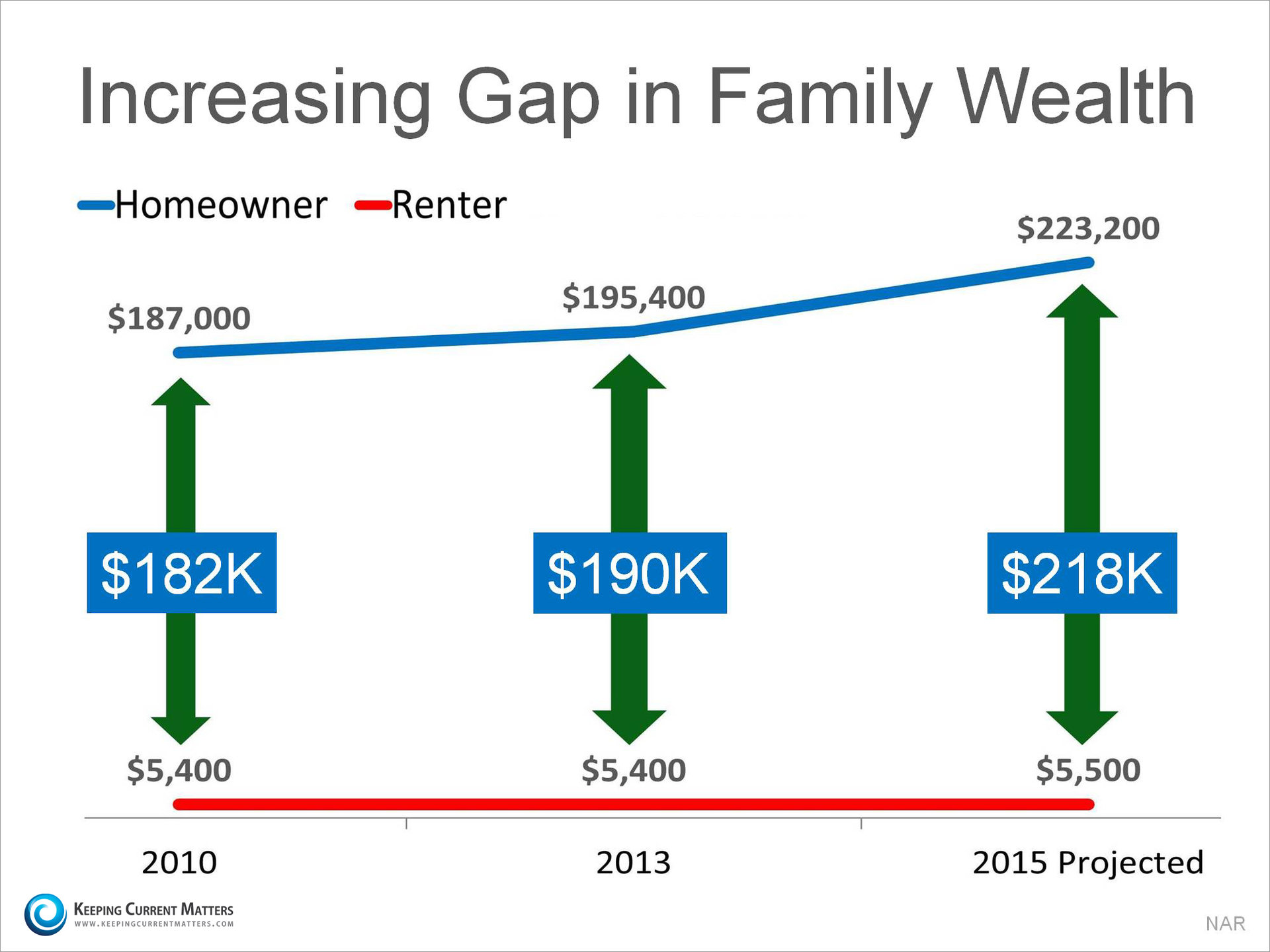
Increasing Gap In Family Wealth | Keeping Current Matters
One reason for this large discrepancy in net worth is the concept of ‘forced savings’ created by having a mortgage payment and was explained by the Times:
“Homeownership requires potential buyers to save for a down payment, and forces them to continue to save by paying down a portion of the mortgage principal each month.”
“Even in instances where renters have excess cash, saving a substantial amount is difficult without a near-term goal, like a down payment. It is also difficult to systematically invest each month in stocks, bonds or other assets without being compelled to do so.”  

Bottom Line

“As a means to building wealth, there is no practical substitute for homeownership.” If you are a renter who is considering making a purchase, sit with a local real estate professional who can explain the benefits of signing a contract to purchase over renewing your lease!

http://goo.gl/EY9rQM

Friday, August 28, 2015

NAR’S Latest Existing Home Sales Report [INFOGRAPHIC]


http://goo.gl/zUslCM

NAR's Latest Existing Home Sales Report [INFOGRAPHIC] | Keeping Current Matters

Some Highlights:

  • Existing Home Sales are up 10.3% year-over-year across the country.
  • Sales rose to an annual rate of 5.59 million marking the 10th month in a row of year-over-year gains
  • Prices are up 5.6% year-over-year in the U.S. to a median price of $234,000
  • Marked the 41st consecutive month of year-over year price gains.

Thursday, August 27, 2015

52% Likely to Buy in the Next 5 Years!! Are You?

52% Likely to Buy in the Next 5 Years!! Are You?


http://goo.gl/p969nx


52% Likely to Buy in the Next 5 Years!! Are You? | Keeping Current Matters
According to the recently released BMO Harris Bank Home Buying Report, 52% of Americans say they are likely to buy a home in the next five years. Americans surveyed for the report said they would be willing to pay an average of $296,000 for a home and would average a 21% down payment. The report also had other interesting revelations.

Those Looking to Buy

  • 74% of those looking to buy a new home will consult a real estate agent
  • 59% said they will visit online real estate websites
  • 37% will seek recommendations from friends and family
  • 78% plan to get pre-approved before seriously searching for a home

Those Who Already Own

  • 75% of current home owners set a budget before looking for a home. 16% ended up spending less while 13% went over their budget.
  • 63% of American homeowners spent under six months looking for a new home before they made a purchase.
  • 8% bought their home without participating in an active real estate search - or even any plan to buy at all - because a specific property caught their attention.
The last point is very interesting: Of those that purchased a home, 8% bought “without any plan to buy at all”. A property caught their attention and they acted on it.

Why are More People not Planning their Next Move?

Why are people that are considering a move not putting their home search to a plan, and instead, buying only when a property catches their attention? A recent article by Fannie Mae may give us that answer, there is evidence that a large numbers of homeowners are dramatically underestimating the equity they have in their current home. The report explains:
“Homeowners may be underestimating their home equity. In particular, if homeowners believe that large down payments are now required to purchase a home, then widespread, large underestimates of their home equity could be deterring them from applying for mortgages, selling their homes, and buying different homes.”

Bottom Line

Perhaps it is time to sit with a real estate professional to determine the actual equity you have in your house and take a look at the opportunities that currently exist in the real estate market. This may be the perfect time to move-up, move-down or buy that vacation home your family has always wanted.

Wednesday, August 26, 2015

Should I Wait to Put Down a Bigger Down Payment?

Should I Wait to Put Down a Bigger Down Payment? | Keeping Current Matters
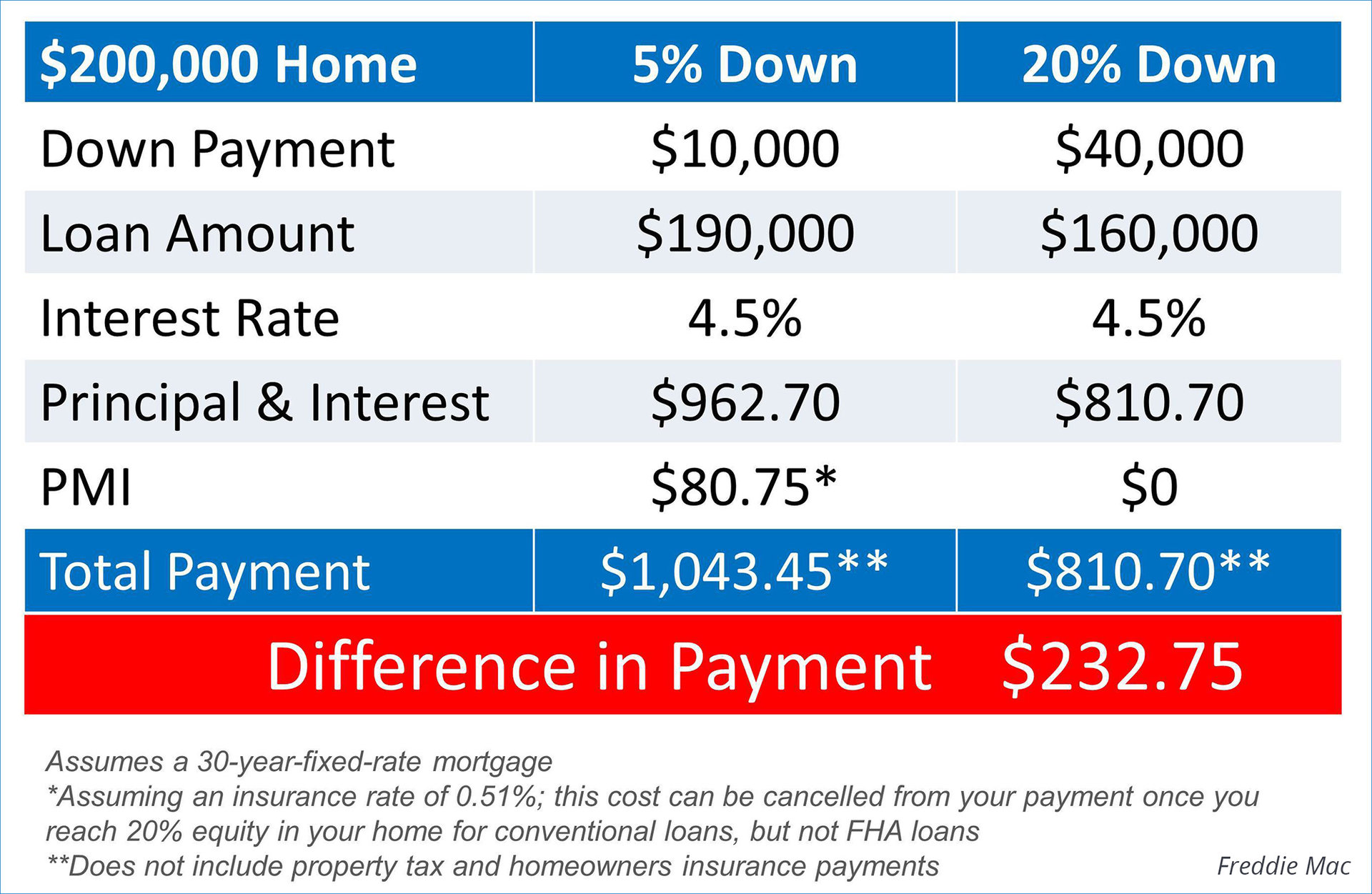
Some experts are advising that first time and move-up buyers wait until they save up 20% before they move forward with their decision to purchase a home. One of the main reasons they suggest waiting is that a buyer must purchase private mortgage insurance if they have less than the 20%. That increases the monthly payment the buyer will be responsible for.
In a recent article, Freddie Mac explained what this would mean for a $200,000 house:
Difference Between a 5% and 20% Down Payment | Keeping Current Matters
However, we must look at other aspects of the purchase to see if it truly makes sense to wait.

Are you actually saving money by waiting?

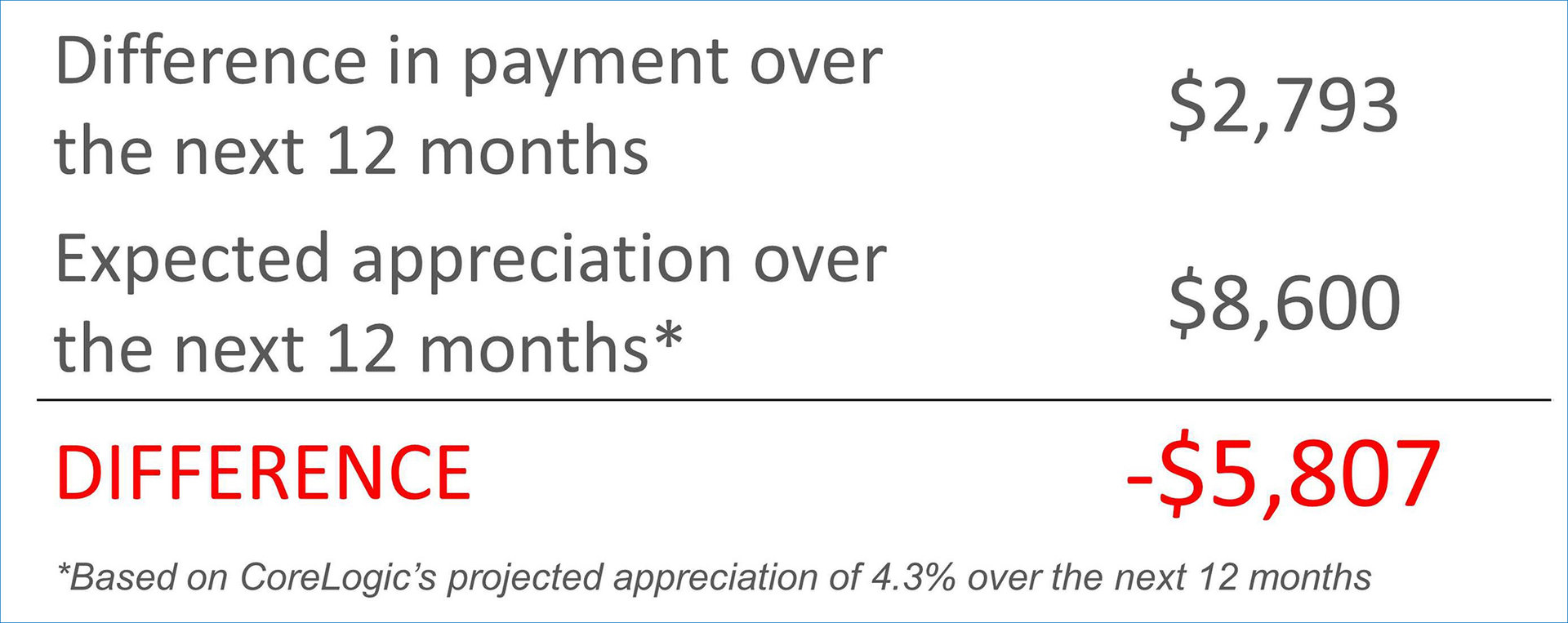
CoreLogic has recently projected that home values will increase by 4.3% over the next 12 months. Let’s compare the extra cost of PMI against the projected appreciation:
PMI vs Appreciation | Keeping Current Matters
If you decide to wait until you have saved up a 20% down payment, the money you would have saved by avoiding the PMI payment could be surpassed by the additional price you eventually pay for the home. Prices are expected to increase by more than 3% each of the next five years.
Saving will also be more difficult if you are renting, as rents are also projected to increase over the next several years. Zillow Chief Economist Dr. Svenja Gudell explained in a recent report:
"Our research found that unaffordable rents are making it hard for people to save for a down payment ... There are good reasons to rent temporarily – when you move to a new city, for example – but from an affordability perspective, rents are crazy right now. If you can possibly come up with a down payment, then it's a good time to buy a home and start putting your money toward a mortgage."
Laura Kusisto of the Wall Street Journal recently agreed with Dr. Gudell:
“For some renters there may be a way out: Buy a house. Mortgages remain very affordable.”

Mortgage rates are expected to rise…

Freddie Mac is projecting that mortgage interest rates will increase by almost a full percentage point over the next 12 months. That will also impact your mortgage payment if you wait.

Bottom Line

Sit with a real restate or mortgage professional to truly understand whether you should buy now or wait until you save the 20%.

http://goo.gl/qpcibC

Tuesday, August 25, 2015

Don’t Get Caught In The Renter’s Trap

Don’t Get Caught In The Renter’s Trap


http://goo.gl/H5Wico


Don't Get Caught In The Renter's Trap | Keeping Current Matters
There are many benefits to homeownership. One of top ones is being able to protect yourself from rising rents and lock in your housing cost for the life of your mortgage.
The National Association of Realtors (NAR) released their findings of a study in which they studied “income growth, housing costs and changes in the share of renter and owner-occupied households over the past five years in metropolitan statistical areas throughout the US.”

Don’t Become Trapped

The study revealed that over the last five years a typical rent rose 15% while the income of renters grew by only 11%. If you are currently renting, this disparity in growth could get you caught up in a cycle where increasing rents continue to make it impossible for you to save for a necessary down payment.
The average renter in the United States pays 30% of their income on housing compared to that of a homeowner who can expect to spend 15%.
In many metro areas the percentage of income spent on housing is even higher and continues to rise every year. Like in San Francisco, CA, where the average renter spends 59% of their monthly income on housing or nearly 65% in Boston, MA.
Homebuyers who purchased their home over the same five-year period locked in their housing costs and were able to grow their net worth as home values have increased and their mortgage balances have gone down.

Know Your Options

Perhaps, you have already saved enough to buy your first home. HousingWire reported that analysts at Nomura believe:
“It’s not that Millennials and other potential homebuyers aren’t qualified in terms of their credit scores or in how much they have saved for their down payment.
It’s that they think they’re not qualified or they think that they don’t have a big enough down payment.” (emphasis added)
As we have reported last week, over 60% of Millennials who recently bought a home put down less than 20%; 36% put down less than 5%. Your dream home may be more attainable than you ever imagined!

Bottom Line

Don’t get caught in the trap so many renters are currently in. If you are ready and willing to buy a home, find out if you are able. Have a professional help you determine if you are eligible to get a mortgage.

Monday, August 24, 2015

What You Do Not Need To Hear From Your Listing Agent!

What You Do Not Need To Hear From Your Listing Agent! | Keeping Current Matters
You’ve decided to sell your house. You begin to interview potential real estate agents to help you through the process. You need someone you trust enough to:
  • Set the market value on possibly the largest asset your family owns (your home)
  • Set the time schedule for the successful liquidation of that asset
  • Set the fee for the services required to liquidate that asset

An agent must be concerned first and foremost about you and your family in order to garner that degree of trust. Make sure this is the case.

Be careful if the agent you are interviewing begins the interview by:
  • Bragging about their success
  • Bragging about their company’s success
An agent’s success and the success of their company can be important considerations when deciding on the right real estate professional to represent you in the sale of the house. However, you first need to know they care about what you need and what you expect from the sale. If the agent is not interested in first establishing your needs, how successful they may seem is much less important.
Look for someone with the ‘heart of a teacher’ who comes in prepared well enough to explain the current real estate market and patient enough to take the time to show how it may impact the sale of your home.
Not someone only interested in trying to sell you on how great they are.

You have many agents from which to choose. Pick someone who truly cares.


http://goo.gl/8ChI51

Friday, August 21, 2015

Home Prices Up in 93% of Measurable Markets


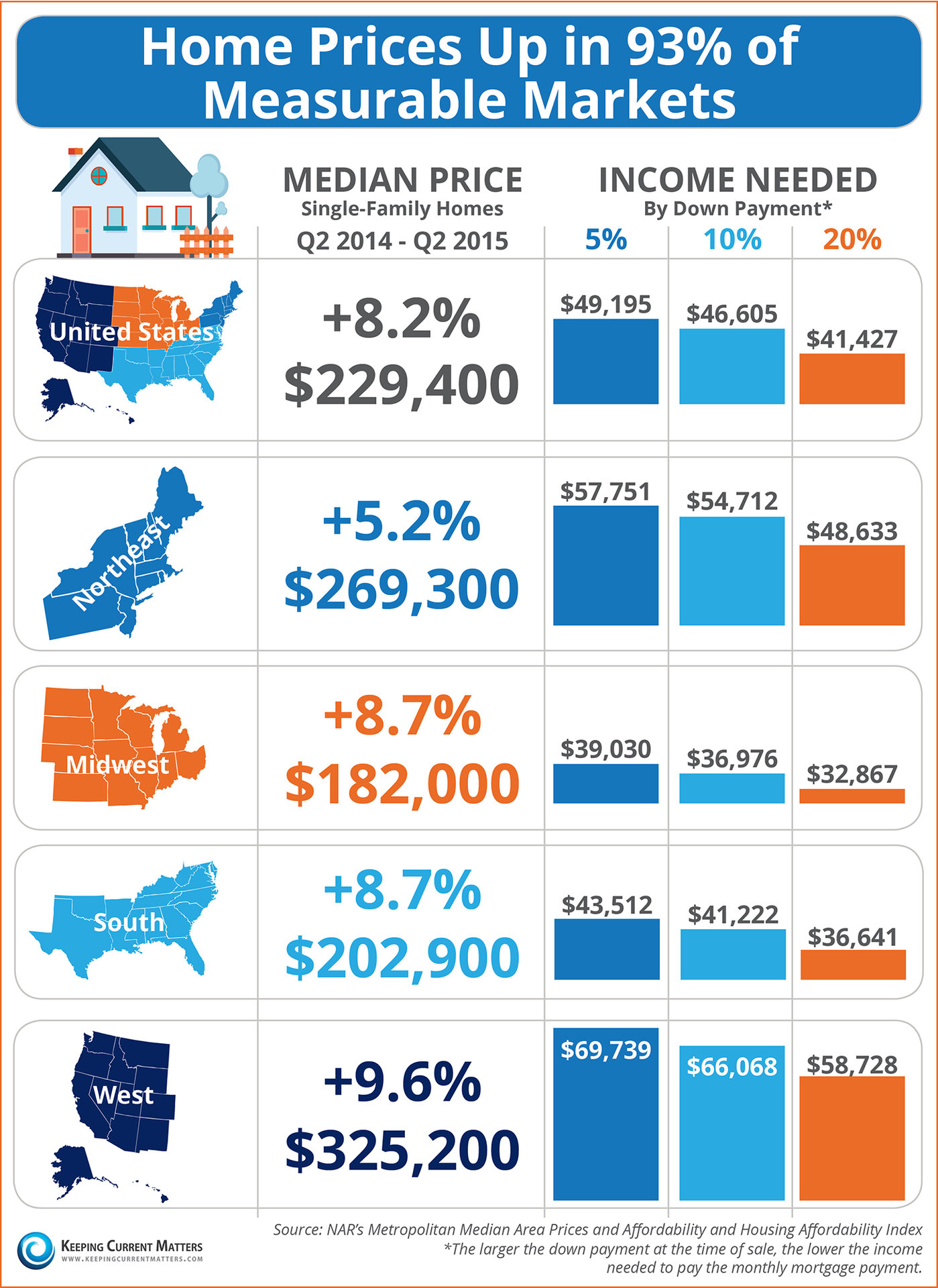
Home Prices Up in 93% of Measurable Markets [INFOGRAPHIC] | Keeping Current Matters

Some Highlights:

  • The national median home price for Q2 is up 8.2% to $229,400
  • The income needed to afford the median home in each region is directly impacted by the amount of the down payment. The larger the down payment the lower the income needed to pay the monthly mortgage payment.
  • The West led the way with the highest median home price at $325,200.
http://goo.gl/CUVoTW